
Author Archive

Jim Allison Commencement Address at UC Berkeley
James P. Allison, University of Texas, MD Anderson Cancer Center. Commencement Address. University of California at Berkeley. Department of Molecular and Cell Biology PhD Program. May 19, 2017 [Prepared remarks, lightly edited] MCB graduates, Class of 2017 – Congratulations! I have the honor today to offer my congratulations on finishing, or should I say surviving, […]

How Cancer Biologists and Infectious Disease Immunologists Can Learn From Each Other
http://news.berkeley.edu/2017/01/19/the-yin-yang-of-cancer-and-infectious-disease/

Endogenous TERT N-terminal tagging affects human telomerase function at telomeres in vivo

On the importance of fundamental research
In a podcast, hosted by the Journal of Immunology, Professor David H. Raulet discusses the importance of fundamental research. The podcast is available here, and refers to a Pillars of Immunology article published previously by David Raulet, highlighting a pair of classic 1971 articles by Cudkowicz and Bennett. The article and podcast provide yet another example of how […]
June is Cancer Immunotherapy Month
With our close partners at the Cancer Research Institute, the CRL is pleased to highlight June as Cancer Immunotherapy Month. The past year has seen immunotherapy ever more in the news. For example, in March of this year, Jimmy Carter announced that immunotherapy had successfully treated his melanoma. And in January, spurred on in large part […]
The Fast Module for Zeiss LSM 880 Airyscan is Here!
The Molecular Imaging Center is excited to announce that the Airyscan Fast Module has been installed and is ready to use on the Zeiss LSM 880 (aka “Trinity“). The Airyscan, described in more detail in this post, works by imaging the full Airy disk onto a 32-channel array detector. The Fast Module takes a similar approach by shaping […]
Identification and characterization of mitochondrial subtypes in C. elegans via analysis of individual mitochondria by flow cytometry
Role for Visual Experience in the Development of Direction-Selective Circuits
Symmetry Breaking in an Edgeless Epithelium by Fat2-Regulated Microtubule Polarity
Highly Efficient Mouse Genome Editing by CRISPR Ribonucleoprotein Electroporation of Zygotes
NAIP proteins are required for cytosolic detection of specific bacterial ligands in vivo
Phytochemical regulation of the tumor suppressive microRNA, miR-34a, by p53-dependent and independent responses in human breast cancer cells
Distinct stages in the recognition, sorting and packaging of proTGFα into COPII coated transport vesicles

From food poisoning to cancer immunotherapy
How has research at UC Berkeley on a soil bacterium called Listeria monocytogenes led to new approaches to cancer treatment? The Cancer Research Lab is founded on the belief that fundamental research can lead to novel and entirely unexpected approaches to cancer therapy. This belief is exemplified by the remarkable story of how research in Professor […]

Immunotherapeutics and Vaccine Research Initiative (IVRI)
The CRL and CEND (The Center for Emerging and Neglected Diseases) are joining forces to help launch a new campus initiative. The new initiative is called the Immunotherapeutics and Vaccine Research Initiative or IVRI, and is being launched officially on March 24-25, 2016 to coincide with a Symposium on Immunotherapy on the UC Berkeley campus. […]
CEND/IVRI Symposium on Immunotherapy at UC Berkeley
The CRL is joining forces with two campus organizations to sponsor an exciting new Symposium at UC Berkeley on Immunotherapy. The CRL will join the Henry Wheeler Center for Emerging & Neglected Diseases (CEND) and the new Immunotherapeutics and Vaccine Research Initiative (IVRI) to sponsor a Symposium that aims to strengthen connections between scientists working […]
Two Successful Events Kick Off 2016 at the MIC
2016 is off to a fantastic start at the Molecular Imaging Center! The MIC and the Helen Wills Neuroscience Institute, together with UC Berkeley faculty, post-docs, graduate students, and corporate partners, taught the inaugural 4D Advanced Microscopy in Brain Circuits course, January 10-16, 2016. According to course’s 16 students, who came from all over the country (5 were from UCB), it […]
Inhibition of oncogenic BRAF activity by indole-3-carbinol disrupts microphthalmia-associated transcription factor expression and arrests melanoma cell proliferation
Shelterin Protects Chromosome Ends by Compacting Telomeric Chromatin
Localized epigenetic silencing of a damage-activated WNT enhancer limits regeneration in mature Drosophila imaginal discs
A Toolkit for Orthogonal and in vivo Optical Manipulation of Ionotropic Glutamate Receptors.
Cooperative Binding of Stromal Interaction Molecule 1 (STIM1) to the N and C Termini of Calcium Release-activated Calcium Modulator 1 (Orai1)
Excitation and inhibition onto central courtship neurons biases Drosophila mate choice
A forward genetic screen reveals novel independent regulators of ULBP1, an activating ligand for natural killer cells
Optogenetic Vision Restoration Using Rhodopsin for Enhanced Sensitivity
Female-Specific Downregulation of Tissue Polymorphonuclear Neutrophils Drives Impaired Regulatory T Cell and Amplified Effector T Cell Responses in Autoimmune Dry Eye Disease
Inaugural MIC Image Contest!
The Molecular Imaging Center is excited to announce its first ever Image Contest! Any images acquired on MIC instruments are eligible. Winning images will be featured in the 2016 MIC Wall Calendar (also a first) as well as on the MIC and Open MIC sites. Thanks to generous sponsorship by Zeiss Microscopy, we will offer […]
Photoactivatable genetically encoded calcium indicators for targeted neuronal imaging

Lasker Award for CRL Immunotherapy Research
Congratulations to former CRL Director James P. Allison for winning the 2015 Lasker-DeBakey Clinical Medical Research Award. The Lasker Committee recognized Dr. Allison’s groundbreaking work on immunotherapy of cancer, specifically citing “the discovery and development of a monoclonal antibody therapy that unleashes the immune system to combat cancer.” The work recognized by the Lasker Award […]
Differential Contributions of Nonmuscle Myosin II Isoforms and Functional Domains to Stress Fiber Mechanics
Analysis of the Role of the C-Terminal Tail in the Regulation of the Epidermal Growth Factor Receptor
Neuron-glia signaling in developing retina mediated by neurotransmitter spillover
Introducing the Zeiss-Berkeley BrainMIC
We are extremely excited to announce the “grand opening” of the Zeiss Brain Innovation Center (BrainMIC), a new public-private partnership between Zeiss Microscopy, LLC, and the University of California, Berkeley. For details on the partnership and future plans, please see the press releases from the Helen Wills Neuroscience Institute and Zeiss Microscopy.
June is Cancer Immunotherapy Month
The UC Berkeley Cancer Research Lab is joining the Cancer Research Institute to promote June as Cancer Immunotherapy Month. The Cancer Research Laboratory (CRL) at UC Berkeley has played a key role in the development of novel cancer immunotherapies. In particular the idea of checkpoint blockade was developed by Prof James Allison when he was Director of […]
Genetically encoded sensors of protein hydrodynamics and molecular proximity
Berkeley leading the way on new approaches to cancer immunotherapy
A newly announced biotech deal shows how basic research at UC Berkeley is leading to new therapeutic approaches for cancer. Novartis has just announced a major $750M partnership with Berkeley-based Aduro BioTech to develop a new class of molecules, called CDNs, as a potential immunotherapy for cancer. These molecules were first discovered in bacteria, but the […]
Stem cell aging. A mitochondrial UPR-mediated metabolic checkpoint regulates hematopoietic stem cell aging

CRL researchers identify a new approach to cancer immunotherapy
David Raulet’s lab, affiliated with the UC Berkeley Cancer Research Laboratory, has published a new paper in Science. The new research, published online on March 5, suggests a new approach to cancer immunotherapy, and pertains to a special class of immune cells called Natural Killer cells. These cells normally patrol the body, seeking out abnormal cells […]
Fluorescent solute-partitioning characterization of layered soft contact lenses
New Instruments in 2015!
New for 2015: Automated Slide Scanning with the Zeiss Axio Scan.Z1 (a.k.a. BayMax). This instrument features 100-slide capacity, and brightfield and fluorescent imaging at 5X, 10X, and 20X magnifications. It’s set up and ready to use in LSA 251. Selective Plane Illumination Microscopy (SPIM): we’ve acquired a second Zeiss LightSheet Z.1 equipped for […]
Two-photon brightness of azobenzene photoswitches designed for glutamate receptor optogenetics
Controlling ionotropic and metabotropic glutamate receptors with light: principles and potential
A spinal opsin controls early neural activity and drives a behavioral light response
AIM 2015 is 1 month away!
The 12th Annual Advanced Imaging Methods Workshop will be held February 4 – 6, 2015. Register before January 23 for discounted registration fee: http://www.cvent.com/d/g4qcy4/1Q Speakers for 2015 include:
Restoration of visual function by expression of a light-gated mammalian ion channel in retinal ganglion cells or ON-bipolar cells
The dyskerin ribonucleoprotein complex as an OCT4/SOX2 coactivator in embryonic stem cells
Bitplane Imaris Workshop: Register Now!
The MIC will be hosting a 2-day mini workshop on Imaris software with the Bitplane representatives on December 3rd and 4th. There will be 2 morning seminars – one for beginners and those who need a refresher, and a second to learn about more advanced features. The afternoons will be dedicated to working one-on-one with you on […]
The MIC is getting a new instrument – a slide scanner!
The MIC will be incorporating a new type of imaging system in October. The Zeiss Axio Scan Z1 is an automated slide scanning system capable of scanning up to 100 1×3 slides in brightfield and fluorescence at high and low magnification. Installation and training for the system will begin soon. Please contact Holly to learn […]

CRL collaborators on new $4.3M grant awarded to study the brain
The Cancer Research Lab is proud announce we are collaborators on a new $4.3M grant from the National Institutes of Health. The grant was awarded to CRL affiliated faculty member Prof John Ngai and a team of associated researchers. The new research will help identify and characterize neuronal cell types in the brain. The CRL will participate […]
Essential role of the cancer stem/progenitor cell marker nucleostemin for indole-3-carbinol anti-proliferative responsiveness in human breast cancer cells
Scientist’s Drive Puts the Brakes on Cancer
The Association of University Technology Managers (AUTM) has posted an article describing Jim Allison’s work in the CRL. The article describes how Jim’s work in the Cancer Research Lab at UC Berkeley led to a novel FDA-approved therapy for melanoma: As a kid, James Allison loved to figure out how things worked. “I wanted to […]

Single Cell Western Blotting
The Herr and Schaffer labs at UC Berkeley describe the development of a new technology called Single Cell Western Blotting. This new technology, which allows for unprecedented analysis of protein expression at the single cell level, was developed in conjunction with Dr. Kartoosh Heydari at the CRL Flow Cytometry Facility. For more information see http://www.ncbi.nlm.nih.gov/pubmed/24880876.
Human intestinal tissue with adult stem cell properties derived from pluripotent stem cells
The cancer glycocalyx mechanically primes integrin-mediated growth and survival
Actin and dynamin2 dynamics and interplay during clathrin-mediated endocytosis
Novel characterization and live imaging of Schlemm’s canal expressing Prox-1
TRPV1 pain receptors regulate longevity and metabolism by neuropeptide signaling
Tethered ligands reveal glutamate receptor desensitization depends on subunit occupancy
Evoked and spontaneous transmission favored by distinct sets of synapses
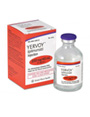
Yervoy (Ipilimumab)
In the late 1990s, while serving as the Director of the UC Berkeley Cancer Research Laboratory, Jim became intrigued by a special biological molecule called CTLA-4. This molecule was displayed on the surface of particular cells in the immune system called T cells. Jim and his colleagues — most notably, graduate student Max Krummel, and […]
Fast modulation of visual perception by basal forebrain cholinergic neurons
Vinculin tension distributions of individual stress fibers within cell-matrix adhesions
Acute stress enhances adult rat hippocampal neurogenesis and activation of newborn neurons via secreted astrocytic FGF2
Long-term channelrhodopsin-2 (ChR2) expression can induce abnormal axonal morphology and targeting in cerebral cortex
tRNA binding, structure, and localization of the human interferon-induced protein IFIT5
Single-cell-resolution imaging of the impact of Notch signaling and mitosis on segmentation clock dynamics
Emergence of patterned activity in the developing zebrafish spinal cord
Imaging T-cell receptor activation reveals accumulation of tyrosine-phosphorylated CD3ζ in the endosomal compartment
Thymocyte-dendritic cell interactions near sources of CCR7 ligands in the thymic cortex
High turnover of ezrin T567 phosphorylation: conformation, activity, and cellular function
Remote control of neuronal activity with a light-gated glutamate receptor
Movies, measurement, and modeling : the three Ms of mechanistic immunology
Zebrafish slow muscle cell migration induces a wave of fast muscle morphogenesis
Developmentally restricted actin-regulatory molecules control morphogenetic cell movements in the zebrafish gastrula
Cystic fibrosis airway epithelial cell polarity and bacterial flagellin determine host response to Pseudomonas aeruginosa